

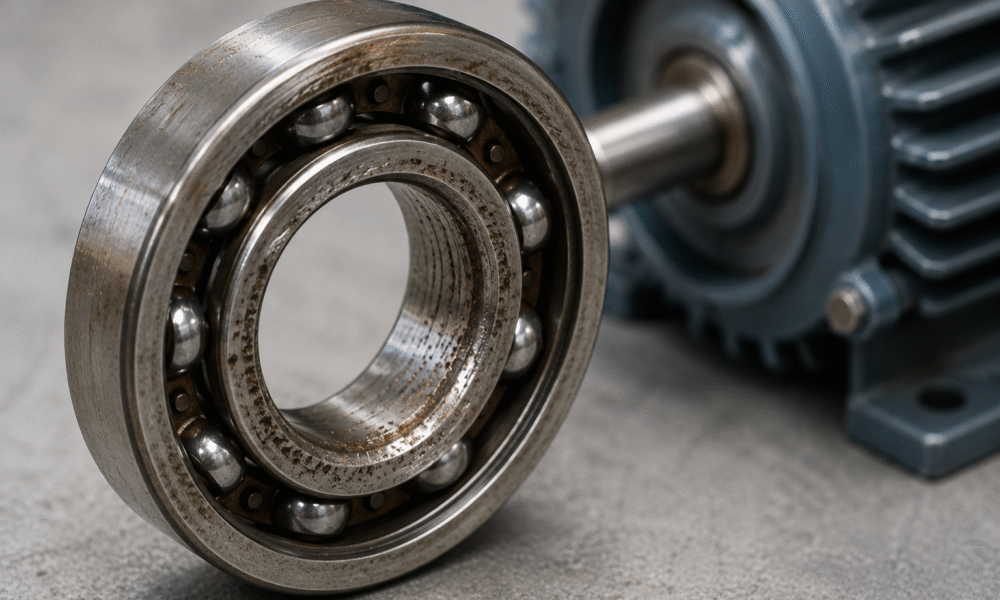
Industrial bearings are designed to withstand heavy loads, continuous operation, and demanding environments. However, one hidden problem can damage bearings long before they reach the end of their expected service life—electrolytic corrosion. This type of bearing damage is often caused by stray electrical currents passing through the bearing, leading to surface deterioration, increased vibration, and costly machine downtime. If you want to understand other hidden reasons behind premature bearing failure, read our guide on why bearings fail even after proper maintenance.
In this blog, we'll explain what electrolytic corrosion in bearings is, why it occurs, how to identify it early, and the best ways to prevent it from affecting your industrial equipment.
What Is Electrolytic Corrosion in Bearings?
Electrolytic corrosion, also known as electrical erosion or electrical discharge damage, occurs when electrical current flows through a bearing instead of following its intended electrical path. As the current passes through the rolling elements and raceways, it generates intense heat at the contact points, melting tiny areas of the metal surface.
Over time, repeated electrical discharges create microscopic pits, grooves, and fluted patterns that reduce the bearing's performance and shorten its service life.
What Causes Electrolytic Corrosion?
Several factors can allow electricity to pass through a bearing instead of grounding safely.
1. Variable Frequency Drives (VFDs)
Modern electric motors often use VFDs to control speed and improve energy efficiency. However, they can generate shaft voltages that discharge through the bearing.
2. Poor Grounding
Improper grounding forces electrical current to find another path, which may be through the bearings.
3. Static Electricity
Machines operating in dry or dusty environments may build up static charges that discharge through bearing components.
4. Faulty Electrical Systems
Damaged insulation, wiring faults, or improper electrical installations can increase the risk of stray current passing through bearings.
5. High-Speed Industrial Motors
High-speed motors, generators, and pumps are more susceptible to electrical discharge damage because of their operating conditions.
Signs of Electrolytic Corrosion
Detecting electrolytic corrosion early can prevent major equipment failures. Many of these warning signs are similar to other bearing problems. You can also read our guide on 5 warning signs your machine bearings are about to fail for a broader understanding.
- Unusual bearing noise during operation
- Increased machine vibration
- Rising operating temperatures
- Premature bearing failure
- Fine grey or black discoloration on raceways
- Fluted grooves or evenly spaced patterns on bearing surfaces
- Reduced machine efficiency
If these symptoms are ignored, the bearing may eventually seize, causing damage to shafts, housings, and other expensive components.
How Electrolytic Corrosion Damages Bearings
Electrical current creates tiny arcs whenever it jumps between rolling elements and raceways. These electrical discharges produce localized temperatures that can exceed the melting point of bearing steel for a fraction of a second.
As this process repeats:
- Small pits form on the raceways.
- Surface roughness increases.
- Lubrication performance decreases.
- Friction and heat rise.
- Fatigue cracks develop.
- Bearing life is significantly reduced.
Poor lubrication can make the damage even worse. Learn more about the role of lubrication in extending bearing life and how proper lubrication protects industrial bearings.
Industries Most Affected
Electrolytic corrosion is common in industries that rely heavily on electrically driven equipment, including:
- Manufacturing plants
- Steel mills
- Cement plants
- Paper mills
- Food processing facilities
- HVAC systems
- Wind turbines
- Water treatment plants
- Mining operations
These industries frequently use motors with variable frequency drives, increasing the likelihood of electrical bearing damage.
How to Prevent Electrolytic Corrosion
Use Insulated Bearings
Insulated bearings prevent electrical current from flowing through the rolling elements, making them ideal for electric motors and generators.
Install Shaft Grounding Devices
Grounding rings safely divert electrical current away from the bearing.
Improve Electrical Grounding
Proper grounding ensures electricity follows the correct path instead of passing through mechanical components.
Regular Bearing Inspection
Monitor vibration, temperature, and bearing condition during scheduled maintenance. A proper maintenance strategy is discussed in our guide on bearing maintenance and repair: how to extend the life of your machinery.
Use Quality Bearings
High-quality bearings manufactured with superior materials and precision offer better resistance to premature damage. Material selection also plays an important role. Read how to select bearing material for different industrial conditions to learn more.
Monitor Electrical Systems
Routine inspection of motors, wiring, and VFD installations helps identify stray current issues before they damage bearings.
Why Early Detection Matters
Electrolytic corrosion often develops gradually. By the time operators hear unusual noise or notice increased vibration, internal bearing damage may already be extensive.
Early detection helps:
- Reduce unexpected downtime
- Lower maintenance costs
- Extend bearing service life
- Improve machine reliability
- Protect connected equipment
Condition monitoring tools such as vibration analysis and thermal inspections can identify problems before complete bearing failure occurs. Proper spare parts planning also minimizes production losses. Learn how in our guide on how to reduce machine downtime with smart spare parts planning for bearings.
Final Thoughts
Electrolytic corrosion is one of the most overlooked causes of premature bearing failure in electrically driven machinery. Although invisible during normal operation, stray electrical currents can rapidly damage bearing surfaces, leading to costly repairs and production losses. Surface damage can also occur due to mechanical issues like fretting and pitting, making regular inspection even more important.
By using insulated bearings, improving grounding systems, monitoring equipment regularly, and selecting high-quality industrial bearings, businesses can significantly reduce the risk of electrical damage and extend the life of their machinery. You can also explore our guide on how to extend bearing life in high-pressure industrial environments for additional maintenance tips.
At Noor & Sons, we supply reliable industrial bearings and provide expert guidance to help industries select the right bearing solutions for demanding applications. Whether you need bearings for electric motors, pumps, compressors, or heavy industrial machinery, our team is here to help keep your equipment operating efficiently and reliably.


No comments