

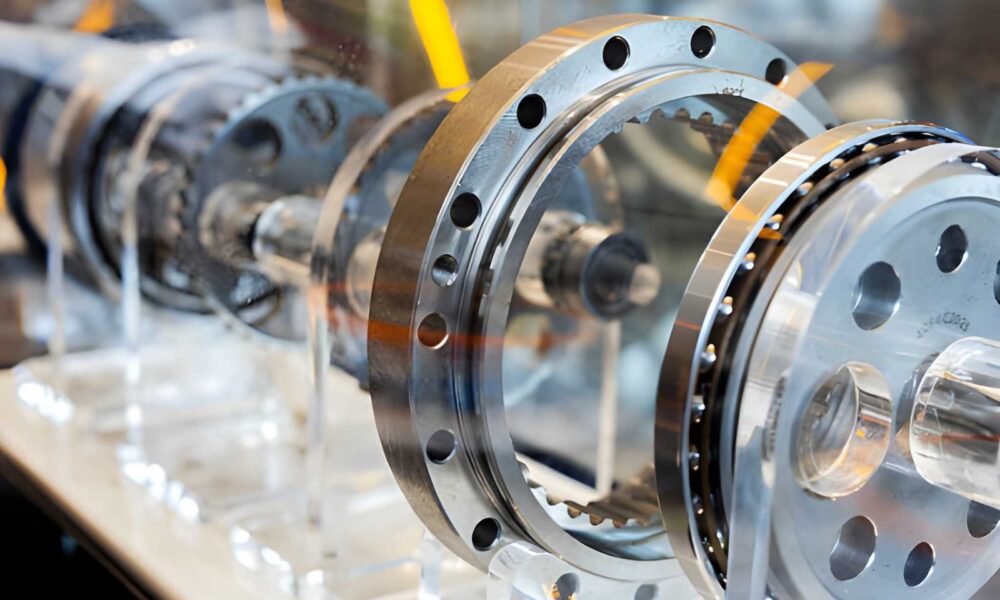
Bearings are small components, but in industrial machinery they carry a huge responsibility. They reduce friction, support rotating parts, and ensure smooth machine performance. However, many companies lose significant money every year due to one critical issue: incorrect bearing selection.
A wrong choice doesn’t always show immediate failure. Sometimes it starts with minor vibration, overheating, or noise—then slowly turns into machine breakdown, production loss, and expensive repairs. Understanding these common mistakes can help industries avoid unnecessary downtime and extend machine life.
1. Ignoring Load Requirements
One of the most common mistakes is selecting a bearing without properly analyzing load conditions. Every bearing is designed for a specific type of load—radial, axial, or a combination of both.
If a bearing is chosen only based on size or availability instead of actual load requirements, it will wear out quickly. Overloaded bearings generate excess heat, cause deformation, and eventually lead to complete failure.
In industries like cement, steel, or manufacturing, even a few hours of downtime can cost thousands in losses. That’s why load calculation should always be the first step in selection.
2. Choosing the Wrong Bearing Type
Many engineers or buyers sometimes use a ball bearing where a thrust or roller bearing is actually required, or vice versa. Each bearing type has a specific purpose.
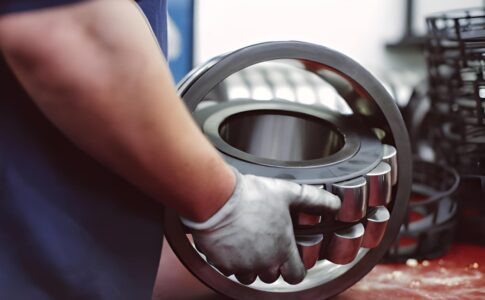
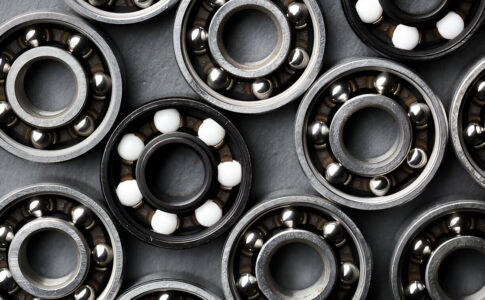
Ball bearings are ideal for radial loads and high-speed applications. Thrust bearings handle axial loads in one direction. Roller bearings are better for heavy load applications.
Using the wrong type may still allow the machine to run temporarily, but it reduces efficiency and shortens lifespan significantly.
3. Ignoring Operating Environment
Industrial environments vary widely. Some machines operate in dusty conditions, while others face moisture, chemicals, or extreme temperatures.
A common mistake is selecting standard bearings without considering these conditions.
Dust can enter unsealed bearings and cause abrasion. High heat can break down lubrication. Moisture can lead to corrosion.
In such cases, sealed or specially coated bearings should be used. Ignoring environmental factors is one of the fastest ways to reduce bearing life.
4. Overlooking Speed Ratings
Every bearing has a maximum speed rating. When machines operate above this limit, excessive friction and heat are generated.
Many companies focus only on load capacity and ignore speed requirements. This results in overheating, lubrication breakdown, and premature failure.
High-speed applications like packaging machines, turbines, or motors require precision bearings designed specifically for speed stability.
5. Poor Lubrication Compatibility
Even the best bearing will fail without proper lubrication. A major mistake is selecting a bearing without considering lubricant type and maintenance conditions.
Some bearings require grease, while others work better with oil lubrication systems. Using the wrong lubricant or inconsistent maintenance leads to increased friction and wear.
In many industries, bearing failure is not due to design—but due to poor lubrication practices.
6. Choosing Low-Quality or Unverified Bearings
To save initial costs, some companies opt for cheap or unverified bearing brands. While this reduces upfront expenses, it often leads to higher long-term costs.
Low-quality bearings have poor material strength, inconsistent dimensions, and weak heat resistance.
These issues result in frequent breakdowns and unexpected replacements. Trusted bearing solutions may cost more initially, but they provide reliability and longer service life.
7. Ignoring Alignment and Fitment Conditions
Improper installation or misalignment is another hidden cause of bearing failure. Even if the correct bearing is selected, incorrect fitment can damage it quickly.
Common issues include loose or overly tight fitting, shaft misalignment, and improper housing support.
These problems create uneven stress distribution, leading to vibration and early wear.
Conclusion
Bearing selection is not just a technical decision—it is a long-term investment in machine reliability and operational efficiency. Most costly breakdowns in industries happen not because bearings are weak, but because they are incorrectly selected or poorly applied.
By avoiding these common mistakes—wrong load calculation, incorrect type selection, ignoring environment, speed mismatch, poor lubrication, low-quality products, and improper installation—companies can significantly reduce downtime and maintenance costs.
In industrial operations, small decisions create big financial impacts. Choosing the right bearing from the start is one of the simplest ways to ensure smooth, efficient, and cost-effective machine performance.


No comments