

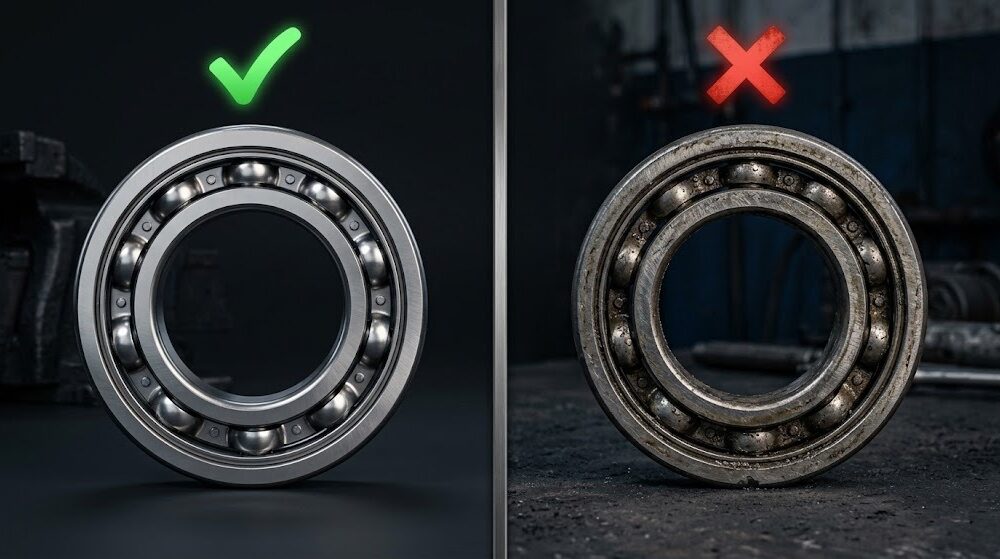
It is 2 a.m. and a conveyor motor at your plant has just seized. The maintenance team replaces the bearing with one bought last week at a “great price” from a seller nobody had heard of. The box says NTN. The markings look right. Three weeks later, the line stops again, and this time the shaft is damaged too.
Nothing about that bearing was cheap. You just paid for it later, with interest.
This is the story behind many bearing failures in Pakistan’s industrial sector, and it starts with one decision: where you buy. Let’s look at what is really at stake.
Risk 1: You May Be Holding a Counterfeit
NTN is one of the most trusted names in the bearing world, which is exactly why it is one of the most copied. Counterfeiters know that a famous brand sells itself, and they rely on buyers who check only the logo. That is why buying genuine NTN bearings in Pakistan from a verified source matters more than the price printed on the box.
Fake bearings are often built from low-grade steel with poor heat treatment. They may pass a quick visual check, but they fail where it matters: under load, at speed and in heat. An unauthorized seller has no obligation, and often no ability, to prove where the stock came from.
Here is the uncomfortable part: many sellers of fake products do not even know they are selling fakes. They bought from someone who bought from someone else. When the chain of supply is unclear, nobody is responsible.
Risk 2: Your Warranty Is Worthless
A genuine NTN bearing comes with manufacturer backing, but only when it is bought through the proper channel. If the bearing fails early and the seller cannot trace it back to an authorized source, a warranty claim goes nowhere.
You are left with the replacement cost, the labour, and the lost production, with no one to hold accountable. An authorized distributor, on the other hand, has a direct line to the manufacturer and every reason to protect that relationship.
Risk 3: Early Failure Costs More Than the Bearing
Let’s do the maths most buyers skip. Suppose a counterfeit bearing saves you a few thousand rupees. Now count what a premature failure can cost:
- Unplanned downtime: In cement, textile, sugar or steel, one hour of stoppage can exceed the price of dozens of bearings.
- Collateral damage: Shafts, housings, seals and gears often fail along with it.
- Repeat labour: The same job has to be done twice, with the same crew.
- Safety exposure: A bearing that seizes on rotating equipment is a hazard to the people nearby.
Savings that disappear in a single breakdown were never savings.
Risk 4: Wrong Specifications, Wrong Fit
Bearings are not interchangeable just because the bore size matches. Clearance class, cage type, seal design, load rating and tolerance grade all affect performance. Unauthorized sellers often stock whatever is available, not whatever your application needs.
A shop that sells on price alone rarely asks about your operating temperature, speed or load. A professional industrial bearing supplier does, because a wrong recommendation damages their reputation and yours. That technical guidance is not an extra. It is part of what you are buying.
Risk 5: No Technical Support When You Need It
When a bearing fails, you need to know why. Was it contamination, misalignment, over-greasing or poor installation? Without answers, you replace the part and repeat the failure.
Authorized suppliers can help with failure analysis, lubrication advice and correct fitting practices. A random seller usually cannot, and often will not pick up the phone after the sale.
Risk 6: Hidden Legal and Compliance Problems
For companies with audits, ISO certifications or export customers, spare parts must be traceable. Bearings without invoices, documentation or a clear origin can create compliance headaches. In some industries, using unverified components can even affect insurance claims after an accident.
If your business answers to clients or auditors, “we bought it from the market” is not a defense.
How to Spot a Risky Seller
You do not need to be an expert to protect yourself. Watch for these warning signs:
- A price far below market: If it looks too good to be true, it is.
- No proper invoice or documentation: Always ask for proof of purchase and product details.
- Poor packaging: Look for faded print, spelling mistakes or uneven logo quality.
- Vague answers: Be cautious if the seller cannot explain where the stock was imported from.
- No after-sales support: Avoid sellers who provide no reliable contact details or support after the sale.
Also check the bearing itself: sloppy engraving, rough surface finish, a gritty feel when rotated by hand, or inconsistent markings are all red flags. These signs are not conclusive on their own, so verify authenticity through appropriate manufacturer or distributor channels. When in doubt, do not install it.
The Safer Way to Buy
The solution is simple: buy from a source that can prove its supply chain. You get verified products, correct specifications, proper documentation and someone to call when you have a question.
If you are building a long-term maintenance plan, working with a reliable partner also helps you standardize brands, plan stock and negotiate better terms over time. If you have a specific requirement, speak directly with a trusted bearing supplier in Pakistan before you place an order.
Final Thoughts
The real question is never “How much does this bearing cost?” It is “What happens if it fails?” An unauthorized seller can offer a lower price, but he cannot necessarily offer certainty, accountability or support. Those are the things that help keep your machines running and your team safe.
Next time you reach for the cheapest quote, remember the 2 a.m. breakdown. Then choose the bearing you will never have to think about again.

No comments